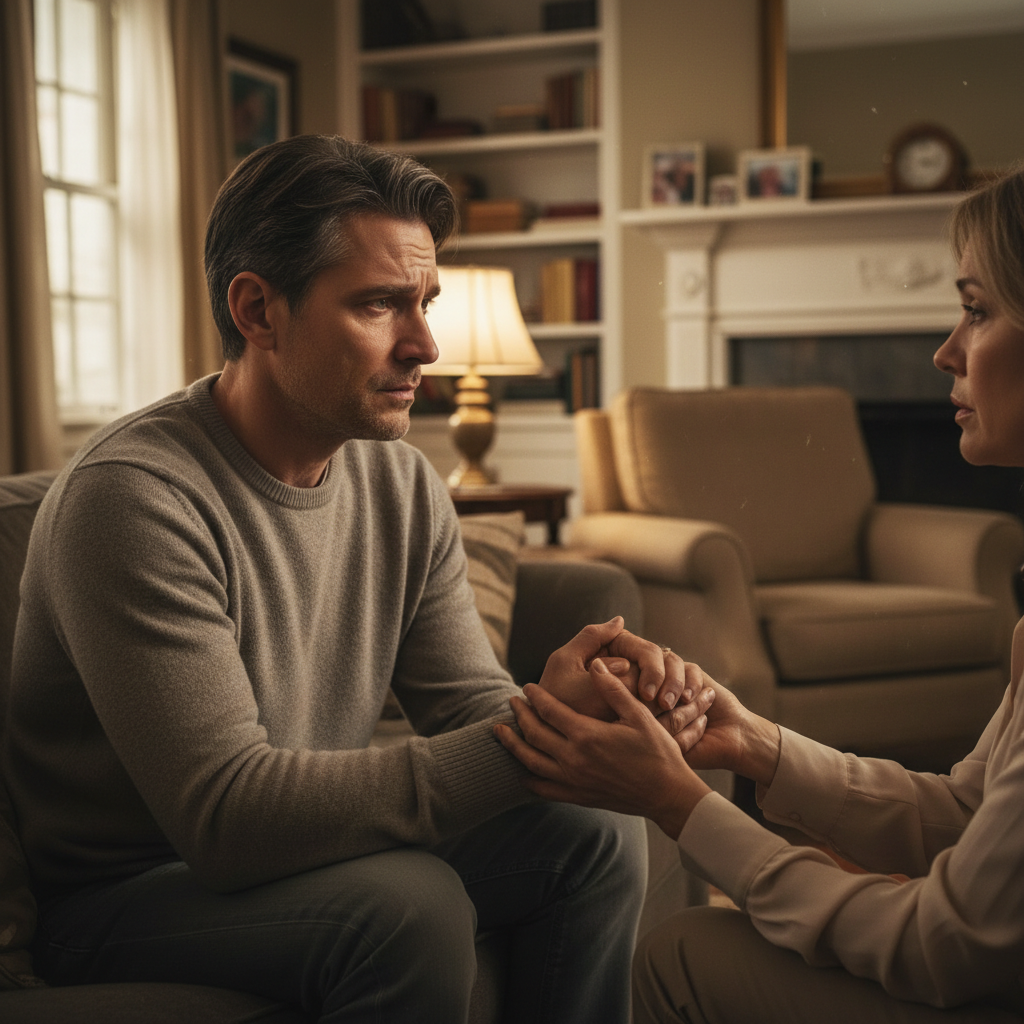
Gambling disorder is sometimes called a "family disease" — not because family members cause it, but because its effects radiate outward to everyone close to the person struggling. The lies, the financial betrayal, the emotional absence, the broken promises: these leave wounds that persist long after the gambling stops.
Understanding how gambling damages relationships — and what the research says about repair — matters both for people in recovery and for the families trying to navigate the aftermath.
The Specific Ways Gambling Damages Relationships
Financial betrayal is often the most concrete damage. Emptied joint accounts, secret credit cards, borrowed money that was never repaid, forged signatures — the financial violations of gambling disorder are experienced by partners as profound betrayals of trust, not just practical problems to solve.
Emotional unavailability is subtler but equally damaging. When gambling is the primary emotional focus, partners and children experience a kind of emotional abandonment. The gambler is physically present but psychologically elsewhere — preoccupied with gambling, recovering from a loss, or planning the next session.
Lying and deception are almost universal features of gambling disorder. The lies begin as self-protection and escalate into elaborate systems of concealment. For partners, discovering the extent of the deception is often more painful than the gambling itself.
Role reversal and enabling develop over time as family members adapt to the chaos. Partners take on all financial responsibility. Children learn not to ask for things. The family system reorganizes around the gambling, often in ways that inadvertently sustain it.
The Impact on Children
Children in homes affected by gambling disorder face elevated risks of anxiety, depression, academic difficulties, and — crucially — their own gambling problems in adulthood. Studies find that children of problem gamblers are 3–4 times more likely to develop gambling disorder themselves, through a combination of genetic predisposition and environmental modeling.
For Partners and Family Members: Gam-Anon
Gam-Anon is a 12-step support program specifically for family members and friends of problem gamblers. Like Al-Anon for families of alcoholics, Gam-Anon helps loved ones understand that they did not cause the gambling, cannot control it, and cannot cure it — but can take care of themselves.
Research on Gam-Anon participation finds that family members who attend meetings report reduced anxiety, improved coping, and better outcomes for the relationship regardless of whether the gambler seeks treatment.
The Recovery Process for Relationships
Relationship repair after gambling disorder is a long process that typically unfolds in stages:
| Stage | Timeframe | Key Tasks |
|---|---|---|
| Crisis stabilization | 0–3 months | Stop gambling, address immediate financial crisis, establish basic safety |
| Disclosure and accountability | 3–12 months | Full financial disclosure, honest conversation about the extent of the problem |
| Rebuilding trust | 1–3 years | Consistent behavior over time, financial transparency, couples therapy |
| Integration | 3+ years | New relationship identity, shared goals, genuine intimacy restored |
"Trust is rebuilt in small moments, not grand gestures. It's the hundredth time you do what you said you would do." — Recovery counselor
When Relationships Don't Survive
Not all relationships survive gambling disorder. Sometimes the damage is too extensive, or one or both partners decide that separation is the healthiest path. This is not failure — it is sometimes the most honest and loving choice available.
For people in recovery, the end of a relationship can be a profound grief, but it need not be the end of the recovery journey. Many people build deeply fulfilling relationships after gambling — relationships built on honesty and genuine presence in ways that were impossible during active addiction.