There is a reason casinos are among the most profitable businesses in the world. It is not luck, and it is not because gamblers are foolish. It is mathematics — specifically, a concept called the house edge, which is built into every game on the floor.
Understanding the house edge won't make gambling less tempting for someone with a gambling disorder. But it can be a powerful cognitive tool in recovery — a clear-eyed view of what gambling actually is, stripped of the illusions that sustain it.
What Is the House Edge?
The house edge is the percentage of each bet that the casino expects to keep over time. It is not the percentage you lose on any given bet — you might win big on a single spin. It is the mathematical certainty of what happens when you play long enough.
| Game | House Edge | What It Means |
|---|---|---|
| Blackjack (basic strategy) | 0.5% | Best odds in the casino — still a losing game |
| Baccarat | 1.06% | $1.06 lost per $100 wagered, on average |
| Craps (pass line) | 1.41% | $1.41 lost per $100 wagered |
| Roulette (American) | 5.26% | $5.26 lost per $100 wagered |
| Slot machines | 2–15% | Varies widely; average ~8–10% |
| Keno | 20–35% | Among the worst odds in any casino |
| Lottery | ~50% | The worst expected value of any legal gambling |
Expected Value: The Math That Matters
Expected value (EV) is the average outcome of a bet if it were repeated an infinite number of times. In gambling, the EV is almost always negative — meaning you are mathematically expected to lose money.
Consider a simple example: a coin flip where you win $1 on heads but lose $1.05 on tails. The expected value of each flip is -$0.025. That's a 2.5% house edge. Play 1,000 times and you'd expect to lose $25. Play 10,000 times and you'd expect to lose $250. The more you play, the more certain the loss becomes.
"The house edge is not a conspiracy. It is a mathematical guarantee, built into the rules of every game. No strategy, system, or streak changes the underlying math."
The Gambler's Fallacy: Why Systems Don't Work
One of the most persistent myths in gambling is that past outcomes influence future ones. If a roulette wheel has landed on red five times in a row, many people feel that black is "due." This is the gambler's fallacy, and it is mathematically false.
Each spin of a roulette wheel is an independent event. The wheel has no memory. The probability of red or black on the next spin is exactly the same regardless of what has happened before. No betting system — Martingale, Fibonacci, D'Alembert — can change this fundamental reality.
Slot Machines: Designed for Addiction
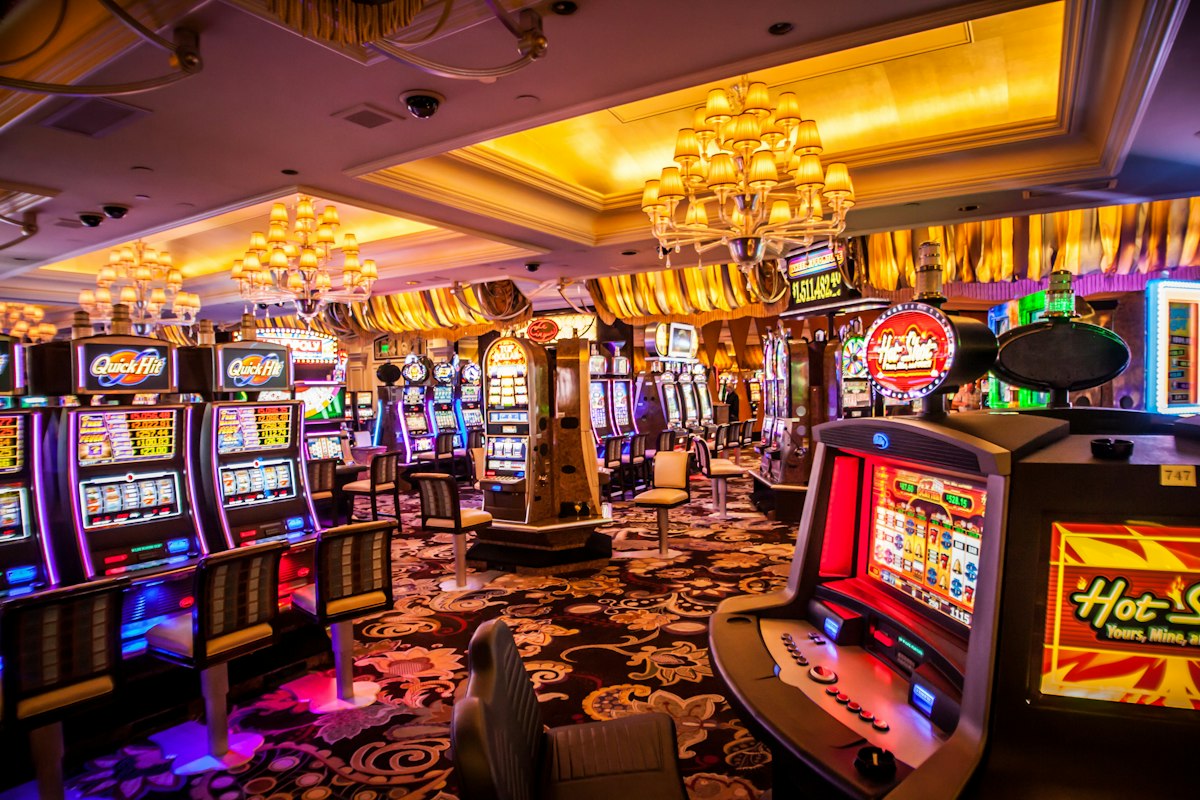
Modern slot machines are engineering marvels of behavioral psychology. Their house edges typically range from 2% to 15%, but the more important number is the speed of play. A slot machine can process 600–1,200 spins per hour. At even a modest $1 per spin with a 5% house edge, that's $30–$60 in expected losses per hour — faster than almost any other casino game.
Slot machines also use near-misses, variable reward schedules, and "losses disguised as wins" (where you win less than you bet but the machine still celebrates) to maximize engagement and minimize the perception of losing.
Sports Betting: The Math of "Sharp" Bettors
Sports betting has a different structure. The house edge comes primarily through the vig (or juice) — typically -110 on both sides of a bet, meaning you must bet $110 to win $100. This creates a house edge of approximately 4.5%.
Professional sports bettors (sharps) can sometimes find edges through superior information or modeling. But studies consistently show that fewer than 1–2% of sports bettors are long-term profitable. For the vast majority, sports betting is a losing proposition over time.
Why This Matters for Recovery
For someone in recovery from gambling disorder, understanding the mathematics can serve as a cognitive anchor. When the urge to gamble arises, it is often accompanied by distorted thinking: "I'm due for a win," "I have a system," "This time will be different." The math provides a clear, factual counter-narrative: the game is designed so that you lose. Not sometimes. Over time, always.