Online Poker Addiction: How 24/7 Access Turns a Hobby Into a Crisis
For millions of men, poker is a beloved pastime—a game of skill, strategy, and friendly competition. The shift from a physical poker table to the digital felt has placed this game right in our pockets, available anytime, anywhere. This convenience, however, comes with a hidden cost. The very features that make online poker so appealing—its 24/7 accessibility, the speed of play, and the solitary nature of the game—also make it uniquely susceptible to addiction. What begins as a harmless hobby can quickly escalate into a crisis, with devastating consequences for one's finances, relationships, and spiritual well-being.
This article explores the specific dangers of online poker addiction, helping you understand how the digital version of the game creates a higher risk of problem gambling than its live counterpart. We will examine the signs of addiction, the devastating costs, and a path toward recovery rooted in honesty, practical steps, and faith. If you're questioning your own habits or are concerned about someone you know, this is a crucial read.
The Unseen Risks: Why Online Poker is a Different Beast
While the core rules of poker remain the same, the online environment fundamentally alters the experience, introducing a set of risks that are not as prevalent in a live setting. Understanding these differences is the first step in recognizing the potential for a problem.
The 24/7 Casino in Your Pocket
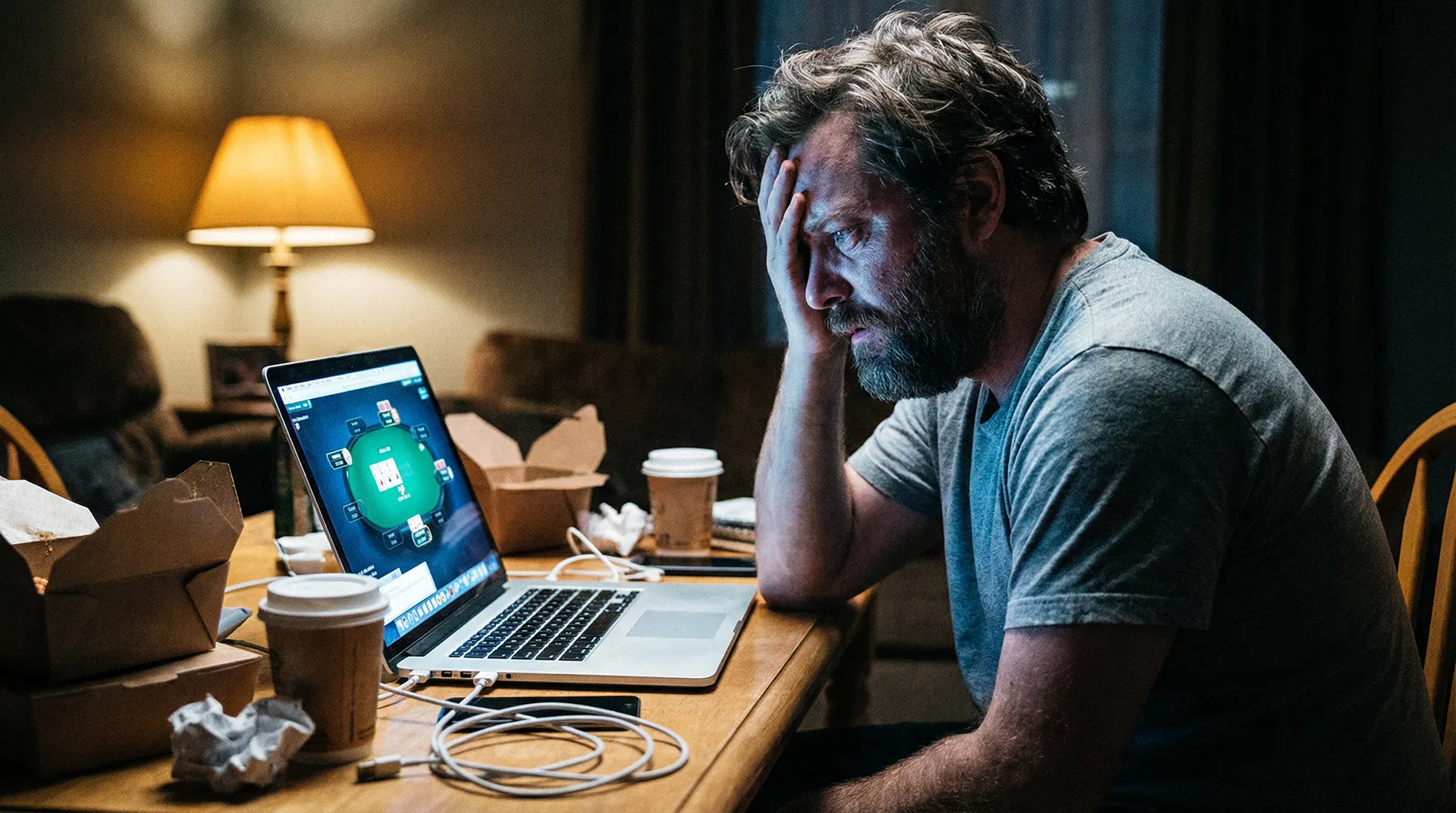
The most significant difference is the sheer, unrelenting accessibility. A live poker game requires travel, a time commitment, and operating within the casino's hours. Online poker has no such barriers. It is available 24 hours a day, 7 days a week, on your computer, tablet, or smartphone. This constant availability removes the natural pauses and breaks that are built into live play, making it far easier to lose track of time and money.
Speed, Volume, and Multi-Tabling: A Recipe for Rapid Escalation
Online poker platforms are designed for speed. With automated dealing and betting, you can play significantly more hands per hour than in a live game. A typical live game might see 30 hands per hour; online, you can easily play 60-100 hands per hour at a single table. Now, factor in multi-tabling—the ability to play at multiple tables simultaneously. It's not uncommon for experienced online players to play four, eight, or even more tables at once. This dramatically increases the volume of play and the amount of money at risk. While it may seem like a way to increase winnings, it also accelerates losses and can quickly lead to a state of chasing losses, a hallmark of problem gambling.
The Isolation Factor: Anonymity and the Lack of Social Friction
In a live poker game, you are surrounded by other people. There is a social element to the game, and your actions are visible to others. This social friction can act as a natural brake on impulsive or destructive behavior. Online, you are anonymous. You are a username and an avatar. This anonymity can lead to a sense of detachment from the real money being wagered, making it easier to make reckless decisions. The isolation also means there is no one to notice if you are on a losing streak, playing for too long, or showing signs of distress.
Designed for Engagement: Behavioral Science and App Design
Online poker apps are not just games; they are sophisticated pieces of software designed to maximize user engagement. They employ a range of techniques rooted in behavioral psychology to keep you playing. These can include loyalty programs, bonuses for frequent play, and in-game achievements. The apps also meticulously track your playing habits, from the stakes you play to the times you are most active. This data can be used to tailor promotions and offers that are most likely to keep you engaged, even when you are losing.
| Feature | Live Poker | Online Poker |
|---|---|---|
| Accessibility | Limited by casino hours and location | 24/7, from anywhere with an internet connection |
| Speed of Play | ~30 hands per hour | 60-100+ hands per hour, per table |
| Social Interaction | High, with direct social feedback | Low, with anonymous players |
| Anonymity | Low | High |
| Multi-tabling | Not possible | Common, leading to high volume of play |
Am I in Too Deep? Signs of Online Poker Addiction
Recognizing a problem is the first and most crucial step toward recovery. Because online poker addiction can be so isolating, it's often up to the individual to identify the warning signs. If you are concerned about your online poker habits, ask yourself the following questions with honesty. Answering "yes" to several of them may indicate a problem.
Self-Assessment Questionnaire
- Do you find yourself thinking about online poker constantly, even when you are not playing?
- Have you tried to cut back or quit playing online poker but have been unable to do so?
- Do you feel restless, irritable, or anxious when you are not playing poker?
- Do you play for longer periods or for higher stakes than you originally intended?
- Do you use online poker as a way to escape from problems or to relieve feelings of helplessness, guilt, anxiety, or depression?
- After losing money, do you often return another day to get even ("chasing" your losses)?
- Have you lied to family members, therapists, or others to conceal the extent of your involvement with online poker?
- Have you jeopardized or lost a significant relationship, job, or educational or career opportunity because of poker?
- Have you committed illegal acts such as fraud or theft to finance your gambling?
- Do you rely on others to provide money to relieve a desperate financial situation caused by gambling?
If these questions resonate with you, it is important to know that you are not alone and that help is available. The anonymity of online poker can make it feel like a secret struggle, but acknowledging the problem is a sign of strength.
The High Cost of a Virtual Game: Financial and Personal Ruin
The consequences of an untreated online poker addiction extend far beyond the virtual felt. The rapid-fire nature of the game, combined with the ease of depositing more money, can lead to staggering financial losses in a very short period. But the cost is not just financial. The secrecy and shame that often accompany addiction can erode relationships, destroy trust, and lead to profound personal and spiritual distress.
The Financial Drain: A Hypothetical Look at Monthly Losses
The following table illustrates how quickly losses can accumulate in online poker compared to a more traditional live game. This is a hypothetical scenario, but it demonstrates the amplified risk of the online environment.
| Factor | Live Poker Player | Online Poker Player |
|---|---|---|
| Avg. Hours Played / Week | 10 | 25 |
| Avg. Buy-in / Session | $200 | $100 (multiple re-buys) |
| Avg. Loss Rate / Hour | $20 | $50 (across multiple tables) |
| Total Monthly Loss | $800 | $5,000 |
*This is a simplified, hypothetical example. Actual losses can be significantly higher.
The Personal Toll: More Than Just Money
While the financial losses can be catastrophic, the personal cost of online poker addiction is often even more devastating. The time spent playing can lead to neglect of work, family, and other responsibilities. The constant stress and anxiety of chasing losses can lead to irritability, mood swings, and depression. Trust is broken as lies are told to hide the extent of the problem. Ultimately, the isolation of the addiction can lead to a profound sense of hopelessness and despair.
A New Hand: Finding a Path to Recovery
Overcoming an addiction to online poker is a challenging journey, but it is a journey that you do not have to walk alone. Recovery is possible, and it begins with the courageous step of acknowledging the problem and seeking help. For men of faith, this journey is also an opportunity to reconnect with God and to re-align one's life with biblical principles of stewardship and self-control.
Faith and Stewardship: Reclaiming What's Been Lost
From a Christian perspective, our time, our talents, and our resources are not our own; they are gifts from God that we are called to manage wisely. An addiction to gambling is, at its core, a violation of this sacred trust. It is a form of poor stewardship that can lead us away from God and into a life of chaos and despair. The Bible speaks clearly about the dangers of the love of money and the importance of self-control.
"For the love of money is a root of all kinds of evil. Some people, eager for money, have wandered from the faith and pierced themselves with many griefs." - 1 Timothy 6:10
Recovery, then, is not just about stopping the behavior; it is about a fundamental reorientation of the heart. It is about turning away from the false promises of the poker table and turning toward the true and lasting hope that is found in a relationship with Jesus Christ. It is about surrendering your will to God and allowing Him to restore what has been broken.
Practical Steps on the Road to Freedom
Alongside the spiritual journey of recovery, there are practical steps you can take to break free from the grip of online poker addiction:
- Seek Professional Help: A therapist or counselor specializing in gambling addiction can provide you with the tools and support you need to overcome this challenge.
- Join a Support Group: Groups like Gamblers Anonymous offer a community of people who understand what you are going through and can provide encouragement and accountability.
- Use Self-Exclusion Tools: Most online poker sites and gambling authorities offer self-exclusion programs that allow you to block yourself from playing for a set period of time.
- Find New Hobbies and Interests: Fill the time you once spent playing poker with healthy and productive activities. Reconnect with old hobbies or explore new ones.
- Involve a Trusted Friend or Family Member: Confide in someone you trust and ask them to hold you accountable. The journey is easier when you have someone in your corner.
Conclusion: You Are Not Your Losses
The world of online poker can be a tempting and dangerous place. Its constant availability, rapid pace, and isolating nature create a perfect storm for addiction. If you have found yourself caught in this storm, it is important to remember that you are not defined by your losses. There is a path to recovery, and it begins with the courageous decision to seek help. By taking honest stock of your situation, by leaning on your faith, and by taking practical steps toward freedom, you can reclaim your life from the grip of addiction. You can be a good steward of the resources God has given you. You can restore broken relationships. You can find a life of purpose and peace beyond the poker table.
The National Problem Gambling Helpline is available 24/7 at 1-800-522-4700.